|
Looking back in Egyptian history between the end of the 18th century until mid of the 19th century the foundation of breeding Egyptian horses goes back to kings like Mohammed Ali or influential personalities like Ibrahim Pasha and Abbas Pasha. Due to their power, wealthiness and the deep love for the Arabian horse, they achieved to bring the best and most beautiful individuals from the peninsula of Arabia to Egypt. The Bedouins of the Nejd, a region in today’s Saudi Arabia, bred the most valuable ones. The Nejdy horses were a product of natural breeding selection during generations in a geographically isolated area with strongest climatic conditions of the desert. Beside these hard natural conditions the horses had to endure the troublesome and long raids of the Bedouins.
|
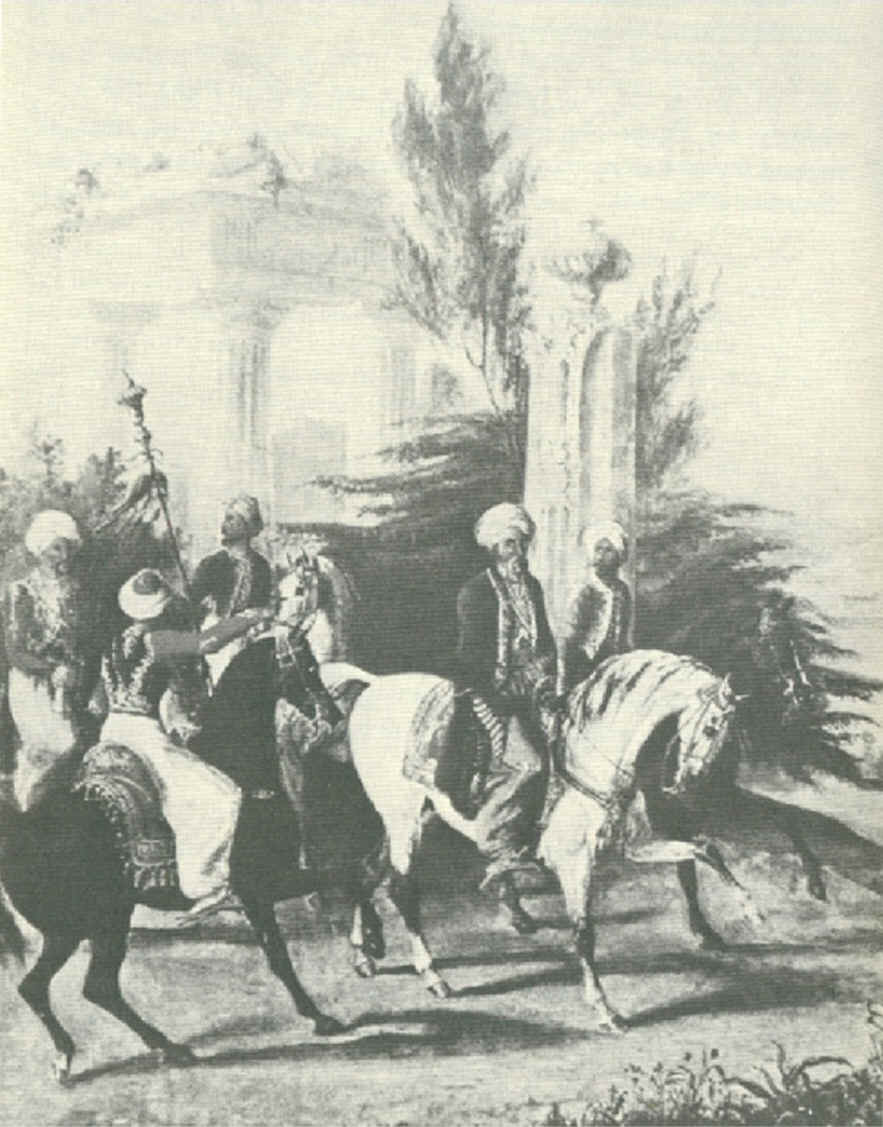 Abbas
Pasha (1813 – 1854) himself owned more than 1000 horses on his stud during
his best days. To some extent he took over horses from his predecessors
Mohammed Ali and Ibrahim Pasha. To another extent Abbas Pasha collected a lot
of the horses directly from the Nejd. It was definitely a period of prosperity
of Arabian horse breeding in Egypt and the Abbas Pasha horses probably belonged
to the best, Egypt has ever seen. The end of the Abbas Pasha area was the
beginning of a very difficult period for the Arabian horse in Egypt and some of
the consequences are visible until today. Abbas
Pasha (1813 – 1854) himself owned more than 1000 horses on his stud during
his best days. To some extent he took over horses from his predecessors
Mohammed Ali and Ibrahim Pasha. To another extent Abbas Pasha collected a lot
of the horses directly from the Nejd. It was definitely a period of prosperity
of Arabian horse breeding in Egypt and the Abbas Pasha horses probably belonged
to the best, Egypt has ever seen. The end of the Abbas Pasha area was the
beginning of a very difficult period for the Arabian horse in Egypt and some of
the consequences are visible until today.
left: Painting of De Portes showing Abbas Pasha and entourage. Reportedly Abbas Pasha was murdered by two of his inferiors in 1854. He was known to be very brutish towards his entourage. |
|
The original purpose of the Nejdy-Horse was a riding horse for the Bedouins and it was extremely important to have a fast, tough and brave horse when fighting against other tribes. Once in Egypt, the Pashas mainly used these horses as a status symbol for beauty, wealth and power. From a breeding perspective there was suddenly missing the natural selection of the desert and the performance selection of the war.
|
|
Often
the studs of the Pashas didn’t offer the best conditions for animal husbandry
and feeding. The mares were hobbled on four legs standing in sand paddocks for
years and the stallions were constantly tied against the stable walls without
having the opportunity to move outside in the field. The foals and yearlings
were normally limited in their liberty of action in small sand paddocks. During
these times it was often very hard for the Pashas and their advisers to
convince stud managers and grooms to change the conditions. The only thing that
could be done was to continue breeding by paying best attention to the breeding
criteria as family or line affiliation and phenotypic attributes in order to
maintain the quality of the horses as long as possible.
|
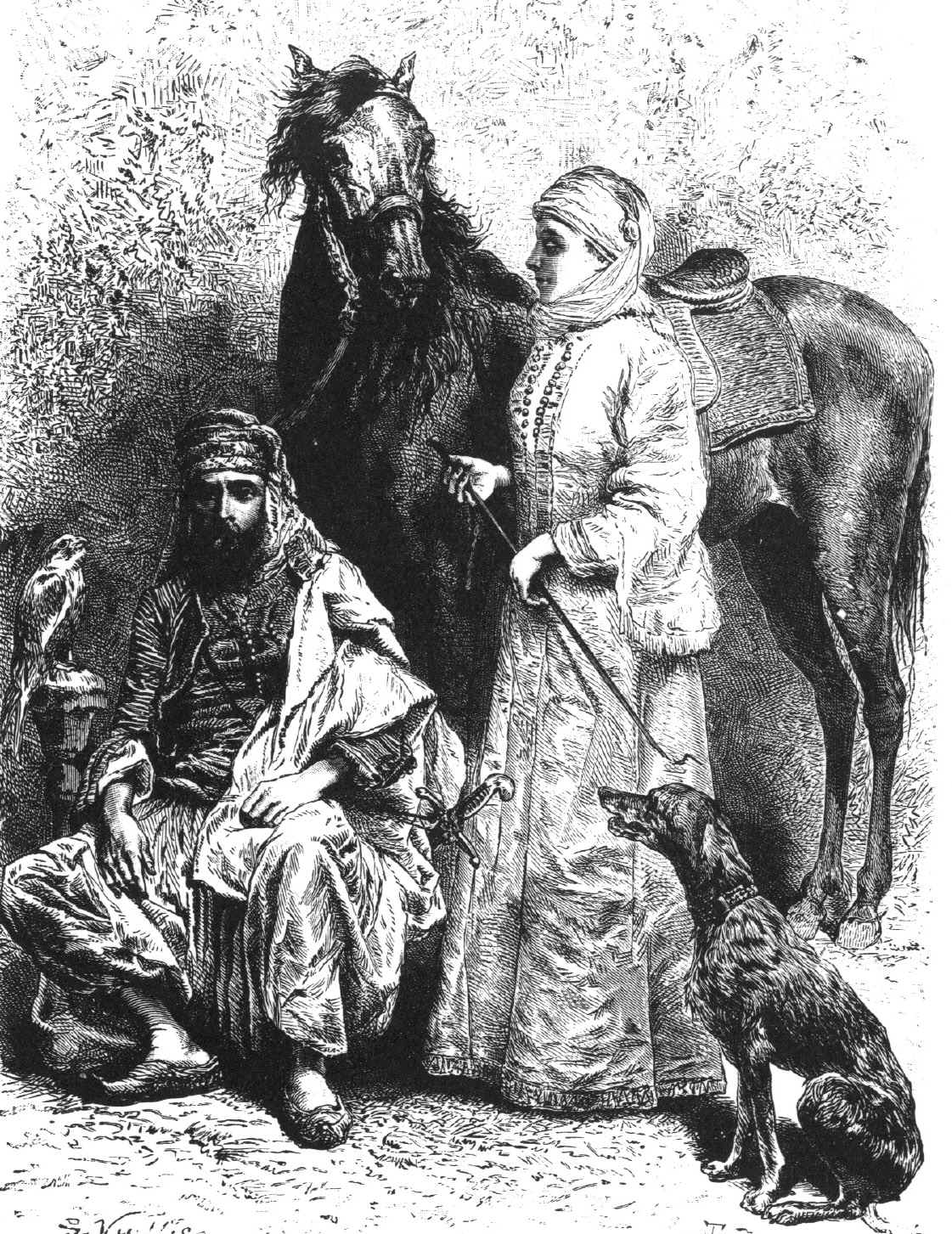 1897
the English Lady Ann Blunt, founder of Crabbet Stud and one of the connoisseur
of Arabian horses at that time, was already mentioning in her notes some
fragility and in-substance of Ali Pasha Sherif’s horses, caused by too much
inbreeding and a lack of moving. She writes: “The
broodmares were still beautiful and with the marks of their high breeding,
though from long inbreeding and lack of vigorous conditions of outdoor life
somewhat fragile and insubstantial“. 1897
the English Lady Ann Blunt, founder of Crabbet Stud and one of the connoisseur
of Arabian horses at that time, was already mentioning in her notes some
fragility and in-substance of Ali Pasha Sherif’s horses, caused by too much
inbreeding and a lack of moving. She writes: “The
broodmares were still beautiful and with the marks of their high breeding,
though from long inbreeding and lack of vigorous conditions of outdoor life
somewhat fragile and insubstantial“.
right: Wilfrid und Lady Anne Blunt shown on one of their long trips through the desert. They were the founders of Crabbet Stud in England as well as the founders of the Stud Sheykh Obeyd in Cairo.
|
| next page |
| back to news |